When someone dies, everything feels overwhelming—and yet, there are immediate decisions that must be made. This guide gives you a clear, step-by-step breakdown of exactly what to do in the first hours, days, and weeks—so you don’t miss anything important.
What To Do Immediately (First 24 Hours)
If the death happens at home:
– Call 911 (or emergency services)
– Wait for official pronouncement of death
– Contact a funeral home
If the death happens in a hospital or facility:
– Staff will handle the pronouncement
– You will be asked to choose a funeral home
Next steps:
– Notify close family members
– Secure the home and valuables
– Locate any will, trust, or end-of-life documents (if available)
⚠️ Do NOT:
– Remove belongings prematurely
– Make major financial decisions
– Agree to services without understanding costs
The First 72 Hours (Critical Actions Checklist)
These are the most time-sensitive tasks:
– Choose burial or cremation
– Begin funeral or memorial planning
– Order 10–15 certified death certificates
– Notify employer (if applicable)
– Arrange care for dependents or pets
💡 Tip: Many institutions will require original death certificates—order more than you think you need.
The Complete Death Checklist (Step-by-Step)
Phase 1: First Week
– Meet with funeral home
– Obtain death certificates
– Locate will or estate plan
– Notify Social Security
– Contact life insurance companies
– Begin obituary process
Phase 2: First Month
– Start probate (if required)
– Notify banks and financial institutions
– Cancel subscriptions and services
– Forward mail
– Inventory assets and belongings
Phase 3: Ongoing Tasks
– Distribute assets according to will
– Resolve outstanding debts
– File final tax return
– Close estate
⚠️ Common Mistakes To Avoid
These mistakes can cost time, money, and create family conflict:
– Ordering too few death certificates
– Paying debts before understanding legal obligations
– Letting family members take items before inventory
– Delaying probate when required
– Not documenting financial accounts early
Avoiding these alone can save months of stress.
🏠 What To Do With Property and Belongings
One of the most overwhelming parts is handling everything left behind.
You may need to:
– Secure the property
– Sort personal belongings
– Decide what to keep, sell, donate, or discard
– Prepare the home for sale (if applicable)
This process often creates emotional and family tension if not handled carefully.
Handling the Estate (Without Getting Overwhelmed)
Estate settlement includes
– Identifying assets and debts
– Navigating probate
– Distributing property legally
Many people don’t realize:
👉 You are NOT personally responsible for most debts
👉 There is a specific legal order for payments
Managing Family Conflict & Emotional Stress
Grief + decisions + money = conflict.
Common challenges:
– Disagreements over belongings
– Unequal expectations
– Miscommunication
Having a clear system reduces conflict dramatically.
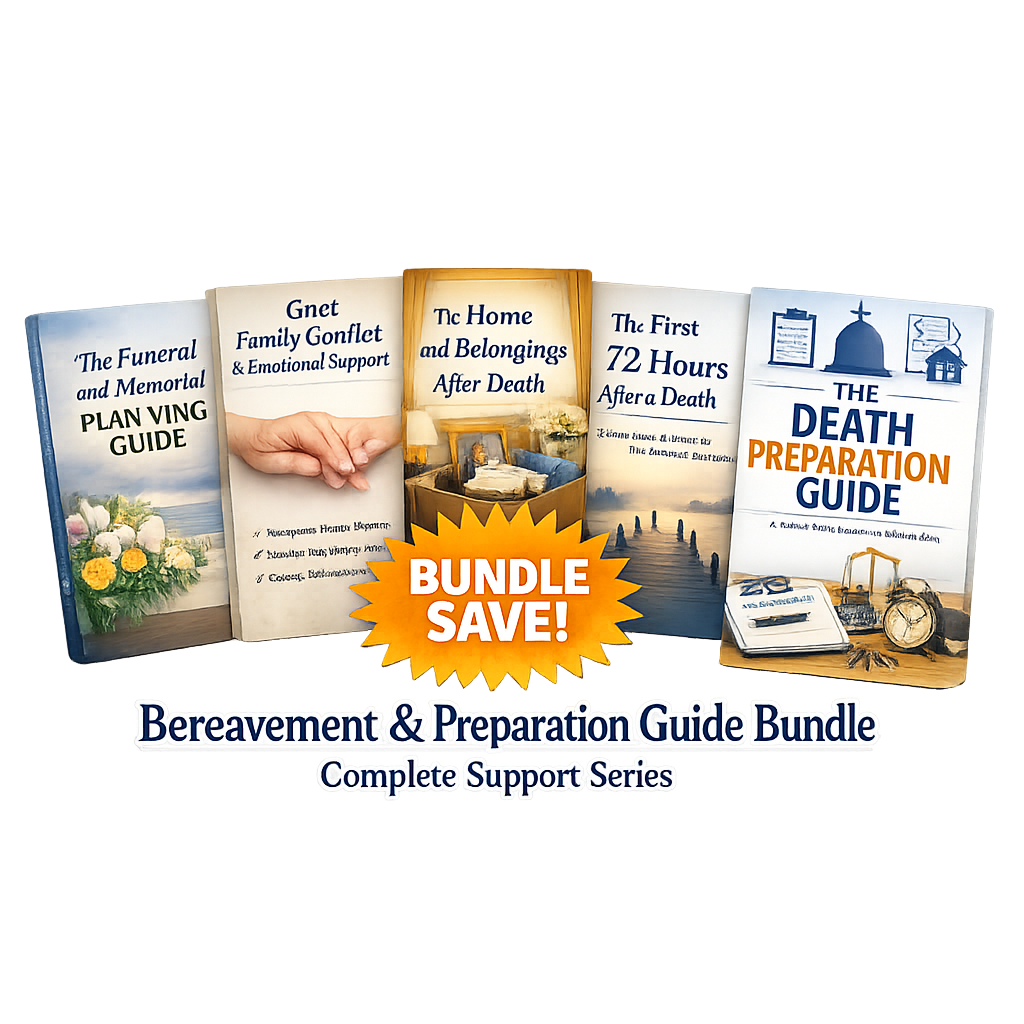
The Complete Death Preparation Bundle
If you want everything handled step-by-step, without second-guessing:
The full system includes 6 focused guides:
1. The First 72 Hours Guide
2. Funeral & Memorial Planning Guide
3. Estate Settlement Guide
4. Home & Belongings Guide
5. Grief & Family Conflict Guide
6. Death Preparation Guide (for future planning)
✔ Checklists
✔ Scripts for calls and decisions
✔ Step-by-step instructions
✔ Covers everything from day one to final closure
Free Printable Checklist (Optional)
Download the condensed version of this guide to keep on hand:
👉 [INSERT DOWNLOAD LINK]
Final Thoughts
You don’t need to figure everything out at once.
Just focus on:
– The next step
– Then the next
This guide is here to give you clarity when you need it most.
If you want a complete, structured walkthrough, the full bundle will guide you through every step—without confusion or missed details.